Showing posts with label Classics. Show all posts

Friday, July 10, 2020

143. A Wrinkle in Time by Madeleine L'Engle


L’Engle, Madeleine. AWrinkle in Time. New York, NY: Square Fish, 1962, Print.

232 pages

Reviewed by Jess d'Artagnan Love

A Wrinkle in Time is a classic in young adult/children’s science fiction. It tells the story of Meg, her younger brother, and a friend as they travel through space and time to try and locate their missing father. The book is heavy handed on Christian themes, and quite obscure and abstract in certain parts. I’m glad I read this as an adult and not a child. Had I read it as a child, it would have all been muddy and confusing to me.

I am generally not a big sci-fi fan but something about how l’Engle crafted this story made it feel cozy rather than technical. The characters were lovable and I especially loved Charles Wallace, Meg’s younger brother. The world building was difficult to process. I am not well-versed in quantum physics and this book is thick in it. In order to really enjoy the book I had to just let go of my wish to actually understand how things were happening and just experience the story as a story.

All in all, I enjoyed reading the book and found the ending touching but I don’t foresee reading this again in the future.   

Would I read it again? 

No

Recommended for

I’m not entirely sure, honestly. It doesn’t read like “true” sci-fi but it also isn’t really a fairy tale.

Not Recommended for

Readers who need clarity or are uncomfortable swimming in abstractions.

3.5 stars out of 5

Madeleine l’Engle’s website: https://www.madeleinelengle.com/

Madeleine l’Engle on Goodreads: https://www.goodreads.com/author/show/106.Madeleine_L_Engle


Connect with me!

Instagram

Twitter

Facebook

Youtube

Goodreads


Friday, May 1, 2020

138. Wuthering Heights by Emily Bronte


Bronte, Emily. WutheringHeights. New York, NY: Bantam Books, 1974. Print.

Originally published in 1847.

308 pages

Reviewed by Jess d'Artagnan Love

Wuthering Heights is a classic. Many know the basic story and there have been film adaptations. It is a classic love story about two lovers who are unable to be together. The Bronte sisters are masters of the gothic novel and this is a masterful work worth reading.

One of things I loved about this novel is how devastatingly human the characters are. They love to the point of madness and misery. The relationships are dysfunctional and full of hyperbole.

The simplicity of their lives also stood out to me. Very few of us anymore can appreciate the simple beauty of sitting in a tree and listening to the birds or laying on the grass and watching the cloud. Bronte makes these simple activities feel like a paradise. Novels of this era delight in the depiction of long walks through lovely countryside to work through internal conflict. It is something I think more of us need to adopt in our own lives.  

This review is short, but what more do you say about a masterful work? If you read or have read this novel, let me know what you thought about it in the comments below.  

Would I read it again? 
Yes.

Recommended for
Readers 18 and older mostly because the language is complex.

Not Recommended for
Young readers. The prose will be difficult for a young person to navigate.


4 stars out of 5


Connect with me!


Sunday, June 10, 2018

120. "Pride and Prejudice" by Jane Austen


Austen, Jane. Pride and Prejudice. New York: Penguin Books, 2002 (originally 1813).

Reviewed by J. d'Artagnan Love

480 pages.

I am not a self-proclaimed fan of the romance genre, but I admit to really enjoying this classic romance. Jane Austen set the bar high for future romance writers. She builds tension so wonderfully that it even turned me, a nearly verifiable aromantic, into a big gurgling ball of mush. I guess she managed to get me to drop my prejudice regarding romance novels (womp, womp).

I feel like most people know the synopsis of a love story: love interests meet, a romance is kindled, something interferes with the romance to make it seem like "omigosh they will never be together now!" and then said obstacle is resolved and they can prance into the sunset smooching in the back of a carriage or something similar (ok, maybe she hasn't persuaded me to drop all of my prejudice about the genre). There are several love interests in this story which makes it extra tense: Bingley and Jane parallel Darcy and Elizabeth.There is much ado about money, and family status that cause trouble in this courtships and allows the story to follow that standard romance genre plot formula.

What I enjoyed the most reading this book was Austen's prose. She is witty and eloquent. For example, Jane Austen invented the humble brag. Well, maybe she didn't invent it but she was able to describe a humble brag with astute finesse: "'Nothing is more deceitful,' said Darcy, 'than the appearance of humility. It is often only carelessness of opinion, and sometimes an indirect boast'" (Austen, Loc 949). Only Austen could so eloquently and wittily describe what we commoners describe as the humble brag.

Since I read the book on my Kindle, I could easily look up language that was new to me and my vocabulary builder on the Kindle filled with new words I've never heard like: arrear, equipage, postilions, curricle, whist, and panegyric. 

While not life changing in any way, I fully understand why this book is so beloved and classified as a "classic." The story is timeless, entertaining, and thought provoking. I *may* give the romance genre another go having read this--no promises though. 

Recommended for: Pretty much anyone with a good reading proficiency. It's a classic that should be read at least once.

Not Recommend for: Readers who struggle with comprehension. If I had tried to read this in high school, I wouldn't have understood most of it as I wasn't as skilled a reader. Try it and see how it goes. If you're not there yet, just keep reading other things and challenging yourself. You'll get there eventually!

4.5 darts out of 5

Saturday, March 10, 2018

113. "The Adventures of Alice in Wonderland" by Lewis Carroll

(Image Source)

Carroll, Lewis. Alice's Adventures in Wonderland. New York: Sterling Publishing, 2005.

129 pages.

Reviewed by J. d'Artagnan Love

Most people know of this classic children's story. Most people also cheapen Alice's journey through Wonderland by claiming the story is just one big acid trip. While it is fantastical and full of whimsy, the story of Alice's Adventures in Wonderland is much more political and social commentary than it is an acid trip.

In sum, Alice, a little girl follows a rabbit down a rabbit hole. This leads her to a series of adventures that are hard to believe. For example, in one scene, Alice enters the rabbit's house and drinks a potion that causes her to grow so large, she sticks one hand out the chimney and a foot out the door. A cat with a Cheshire grin seems to float through the air because he can make parts of his body invisible at will. The story is dizzying and disorienting and makes almost no sense. 

I enjoyed reading the book but I'll be the first to admit that fully appreciating this work is going to require that I do much more extensive research. A brief survey of the literature on this work points to Carroll indulging in a style called English nonsense verse that became fairly popular in his time. Carroll holds some scathing opinions about the English school system based on this tale and that is about as far as I've gotten with my research. 

The edition that I read appeared to only contain the first part of the story (Alice's Adventures in Wonderland) so I need to find the second half and read it (Through the Looking Glass) and continue to read more about how scholars have made sense (as much as one can with the genre) of the writing to feel like I truly "get" Carroll. I'm not yet a frenetic fangirl, but I am intrigued and will keep exploring. 

Recommended for: a reader who has time to dedicate to really learning about the political and social discourse happening in these stories.

Not recommended for: readers who want a story that makes sense or readers not accustomed to searching for clues in writing. Someone who hates poetry, for example, would probably hate this.

3 darts out of 5

Reference
Kwoka, B. (2009).  Literature, History, and Culture in the time of Victoria. Retrieved from http://www.victorianweb.org/authors/carroll/kwoka8.html

(I know I'm mixing citation styles here but I primarily use APA but started this blog in MLA and try to stay consistent. Forgive me?)


Monday, April 6, 2015

92. "A Confederacy of Dunces" by John Kennedy Toole


Toole, John Kennedy. A Confederacy of Dunces. New York: Wings Books, 1980.

462 pages.

Reviewed by J. d’Artagnan Love

John Kennedy Toole has only one published book, A Confederacy of Dunces, and it won the Pulitzer Prize in 1981. The award was given posthumously since Toole died of suicide in 1969. The book was presented to publishers posthumously as well when his mother contacted Walker Percy by letter asking him to look over her dead son’s manuscript. If the story of the novel’s publication elicits sensitivities, this is nothing compared to how incredibly sensitive people are when defending their position on A Confederacy of Dunces.

In A Confederacy of Dunces, readers are introduced to Ignatius J. Reilly, a very fat, very bored, and very complicated master meddler. Ignatius meddles in everyone’s business and is tied up in a weave of stories and characters brackish and static. There isn’t much that happens in the plot; basically, Ignatius’ mother gets in a drunk driving accident and is fined so she asks Ignatius to find a job to pay off the fine. Ignatius is a thirty something unpublished writer with a master’s degree who won’t be trapped in the “system.” In every job he lands he causes problems, uprisings, and treason (effectively dressed as a pirate for one gig).

The book takes a close look at working class New Orleans. Toole’s use of language was brilliant and while most readers pinpoint the humor of the story, I continually found myself keyed in to the underlying sorrow. Humor in this story, for me, isn’t the point. Toole was illustrating sorrowful characters with tragic stories and he used the humor to break the monotony of dead-end lives and days dragged through the mud of poverty.

I’ve never seen a book as divisive as this one. Discuss a book with a group of people and you will get strongly emotional reactions. Book clubs are disbanded after disputes over Ignatius. Friendships are altered after breaking down “who” are the “dunces” in the title. I’ve never seen a book have such a direct impact on how people judge others. In book reviews I’ve read lines like: “If you don’t like this book then we definitely aren’t on the same page,” or “I know I’ll like someone if their favorite book is A Confederacy of Dunces.” I haven’t seen this happen so frequently with other books I’ve read. Whether you did or didn’t like the book, it clearly leaves an impression on people and that is worth noticing.

This books is FOR people: who like quirky characters, interesting illustrations of dialect and language, or who are interested in literature set in New Orleans.

This book is NOT FOR people: who are expecting a fast-paced story, who are expecting a mystery or romance, who are expecting all loose ends to be tied up.

5 darts out of 5

Saturday, January 10, 2015

88. "The Crucible" by Arthur Miller


Miller, Arthur. The Crucible. New York: Penguin Books, 1995.

135 pages.

Reviewed by J. d’Artagnan Love

***TRIGGER WARNING**
This review may be a trigger for those who have PTSD or related disorders as a result of religious fanaticism/fundamentalism.

In the introduction of Act One of The Crucible, Arthur Miller writes, “When one rises above the individual villainy displayed, one can only pity them all, just as we shall be pitied someday. It is still impossible for man to organize his social life without repressions, and the balance has yet to be struck between order and freedom” (7). This passage suggests that what happened in Salem during the witch trials is the enacting of an attitude that still crops up today. It’s the spark of panic that causes mass hysteria and paranoia. It’s the point at which we stop thinking for ourselves and just try to blend in to avoid persecution.

The Crucible is a dramatic depiction of the Salem Witch Trials. Broken up into four acts, The Crucible slowly builds in tension until the climatic and gut-dropping final scene. The Crucible was Miller's thirteenth published play and it examines the darker parts of human nature: fear, blame, and collective delusions. Literary theorists argue that the play is an allegory of McCarthyism. 

This paly is powerful not only for the way in which it brings history to life, but also for the uncomfortable feeling of knowing that something like this is possible and could happen again. I couldn’t help but think about some of the fundamentalist claims made in recent history and how those claims sounded a lot like the claims being made by the fanatics in The Crucible.

Similar to Animal Farm, The Crucible is an important piece of literature not just for its artistry but for its reminder to us that we should never forget the past, lest we end up repeating it.

5 darts out of 5

This play is FOR: people who like gritty, tense stories and historical fiction.

This play is NOT FOR: people who may have PTSD triggered by religious fundamentalism/fanaticism. 

Saturday, October 18, 2014

80. "Animal Farm" by George Orwell


Orwell, George. Animal Farm. New York: Plum, 2003.

152 pages.

Reviewed by J. d’Artagnan Love

It is difficult to review a book as renown as Animal Farm. Originally published in 1945, Orwell’s seminal novel has been studied and read and reviewed enough times that there is little chance I have anything original to add to the conversation at this point. So why write a review?

Well, dear readers, I write this review to perhaps introduce an important work of art which some may not have previously known. I write this review to encourage a broad range of reading. “Beach reads” and reading for entertainment’s sake is a good thing. Reading to learn and to critically think about the work from a socio-political framework is also a good thing. I write this review to encourage my readers to challenge yourselves. Read something that is difficult for you. Read something that makes you uncomfortable. Read something that makes you think about the world differently.

Animal Farm is a novel that has the power to meet all of those challenges. It will challenge you to think critically about the story for it is not just a story about farm animals but of Orwell’s larger political landscape. It may be difficult for some of you to read. Perhaps you will identify with some of the negative behaviors presented in the characters. Animal Farm may make you uncomfortable for that exact reason. It hits close to home and cracks open some societal wounds that are difficult to stare down. Orwell might make you think of the world differently or he might make you feel afraid because the fiction is so much melded with the truth.

It is not enough to just read the book. It can be read in a matter of hours. It is short and simplistic in style. Simply reading it does not do it justice. Read it and digest it. Do half an hour of research about it to elucidate the larger symbols. Discuss it with someone. Think about it. Let it simmer. Re-read it. Read this book to learn, not just to be entertained. It’s worth it. Trust me.

“Twelve voices were shouting in anger, and they were all alike. No question, now what had happened to the faces of the pigs. The creatures outside looked from pig to man, and from man to pig, and from pig to man again; but already it was impossible to say which was which” – George Orwell, Animal Farm

5 darts out of 5

Bookshelf Project Status: KEEP

Sunday, February 12, 2012

52. "Dracula" by Bram Stoker


Stoker, Bram. Dracula. New York: W.W. Norton & Company, 1996.

512 pages

Reviewed by J. d’Artagnan Love

Seeing as I love vampire stories, I figured I needed to get my hands on a copy of one of the original vampire stories—Bram Stoker's, Dracula. I didn’t know if (actually, I didn’t think) I would like the book but I was surprised. I realized I have some preconceived notions about what books considered “classics” are like. These notions are largely based on stereotypes about classic literature being boring, written in indecipherable prose and so on. Dracula is not a novel that fits such stereotypes.

Set in England, Dracula is written in epistolary form. Readers learn about the dreadful Count Dracula through diary entries, telegrams, letters, and newspaper articles. In doing this Stoker allows readers to understand this evil-doer through many lenses and points of view. Readers receive a well-rounded understanding of Count Dracula’s skills and motivations.

I didn’t expect to be frightened by this book, probably because of the previously mentioned preconceived notions, but I was. I was genuinely, hide-under-the-covers, creeped out by certain parts of the plot and descriptions of the characters. Some parts were downright chilling without having to be graphically violent or overtly sexual (as some vampire fiction tends to resort).

Another element that caught me off guard was the element of humor. Stoker does a beautiful job of weaving silliness into the grotesque and frightening storyline. I found myself laughing out loud at moments of awkwardness between Mina and all the men who seem to swoon after her, and at the overzealous Quincy who is quick to shoot first and question later.

I will mostly likely read this book again—I enjoyed it that much! It takes a fabulous book for me to want to read it a second time. I have a total of four books (of the hundreds I’ve read) that I like to re-read and will be adding this one to that list!

5 darts out of 5
Bookshelf Project Status: KEEP!

Saturday, July 30, 2011

44. "The Complete Shorter Fiction of Virginia Woolf" edited by Susan Dick


Dick, Susan, Ed. The Complete Shorter Fiction of Virginia Woolf. San Diego: Harcourt Brace & Co., 1989. Print.

The more I read work by Virginia Woolf, the more I recognize Buddhist themes. The following is from her short story “The Journal of Mistress Joan Martyn,”: “And my brain that was swift and merry at first and leapt like a child at play, settled down in time to sober work upon the highway, though it was glad withal. For I thought of the serious things of life—such as age, and poverty, sickness and death, and considered that it would certainly be my lot to meet them; and I considered also those joys and sorrows that were for ever chasing themselves across my life” (58).

Here one can connect to the story of the Siddhartha Guatma (the Buddha) when he begins his journey and sees a sick man, a poor man, and a dying man. One can also connect her “merry and swift” mind to the monkey mind that, upon meditation, is settled and able to focus.

What I loved about this collection of Woolf's short fiction is that it is organized in chronological order. While reading, you are able to see how her writing evolves and it is sooooo fascinating. She wrote several short stories about characters from one of her seminal texts, Mrs. Dalloway, including such stories as "Mrs. Dalloway in Bond Street," "The New Dress," and "The Man Who Loved his Kind."

Some of my favorite stories from the collection include "Phyllis and Rosamond," "The Journal of Mistress Joan Martyn," "The Mark on the Wall, and" "The Widow and the Parrot: A True Story." If you are a fan of Virginia Woolf, I highly recommend this collection of short fiction.

4 darts out of 5

Bookshelf Project Status: KEEP

Saturday, February 5, 2011

37. "The Color Purple" by Alice Walker


The Color Purple is a classic and for good reason! Written in epistolary form, the book documents the life of Celie, a young black woman who experiences abuse, neglect, and a painful separation from her sister.

Blues music is an important theme throughout the novel as can be seen in characters like Shug, a blues singer that comes to live with Celie. The following is an excerpt from a paper I wrote as an undergrad about the role of blues music in The Color Purple.

The Purpose of Blues Music in Alice Walker's The Color Purple
J. d'Artagnan Love
March 8, 2007
In Alice Walker's The Color Purple, women often found strength through their music. Finding strength and an outlet for expression is essential to the process of personal transformation. Through the novel one can trace a personal transformation in Celie, the protagonist. With the introduction of blues music into her life, Celie is able to become whole.

Before Celie is introduced to blues music, she does not have a voice of her own. She does not use her voice to defend herself or to speak out against the oppression she is faced with daily. Celie is raped by her step-father repeatedly. Instead of fighting back she remains silent and does not reveal to her mother the identity of her children’s father. Along with her silence, she asks her step-father to take her and not Nettie as his sexual partner and dresses in clothing she thinks he will find attractive. After Nettie leaves, Celie becomes even more lost. She has not developed any sense of identity or autonomy and has now lost her main source of social support. Thus, her inner voice is muffled almost entirely by the oppression she faces as a wife to Albert who, like her father, beats her and treats her as property. . . .

Celie is introduced to blues elements with Sofia’s character. Such blues elements include those of womanhood, overcoming obstacles and fighting oppression. With the presentation of these blues elements, Celie begins a slow process of learning self-awareness. . . . Being exposed to Sofia’s strength allows Celie to form a connection with Sofia.
Blues is gradually integrated into Celie’s life with the arrival of Shug Avery upon which, Celie’s process of self-discovery and transformation beings to gain ground. Evidence of this process is seen in small acts of defiance performed by Celie against the patriarchal structures in her social network. An example of this can be seen when Celie learns the first name of her husband. After learning that his name is Albert, she has the option of choosing to refer to him as Albert rather than Mr. __. Instead, Celie continues to refer to her husband as Mr. __, thus defying his identity and the power that his identity holds over her. . . . Celie finds her own voice and expresses her own thoughts and opposition towards domestic violence. Celie has begun to build a foundation of self-acceptance and love.
While Celie builds an emotional foundation for herself, Harpo begins to build a juke joint and the construction of the juke joint parallels Celie’s emotional progress as well as Shug’s physical healing. The construction of the juke joint symbolizes blues music as a form of healing and rebirth for a collective group of oppressed people. By the time the juke joint is finished Shug is ready and well enough to start performing again and Celie, with Shug’s support and guidance, is beginning to experiment with the power of her own voice.. . .

If you would like to read the entire paper email me at:
j[dot]dartagnan[dot]love[at]gmail[dot[com.
5 darts out of 5
Bookshelf Project Status: Donated to a library


Sunday, July 11, 2010

21. "Beneath the Wheel" by Herman Hesse


Hesse, Herman. Beneath the Wheel. New York: Farrar, Strous, and Giroux, 1968.
Translated by Michael Roloff
187 pages

Reviewed by J. d’Artagnan Love

The first book I read by Herman Hesse was Siddhartha. I read that book when I was sixteen and it changed my life. Beneath the Wheel hasn’t been as life-altering, but it is a novel that has an uncanny parallel to some of the decisions I’m making and issues I’m struggling with in my own life. Herman you rascal, you’ve done it again.

Herman Hesse (1877-1962) was a novelist, a poet, and a painter. Originally from Germany, his work frequently explores an individual’s search for self-knowledge, authenticity, and spirituality. He struggled with depression most of his life which he illustrates in Beneath the Wheel.

Beneath the Wheel was Hesse’s second novel and was originally published in 1906. It closely parallels parts of Hesse’s own life, making it a semi-autobiographical work. The novel is about Hans Giebenrath, a young, and vastly intelligent man. The story begins with Hans in the thick of studying for an important state examination. He feels pressure from every part of his community save one—Flaig, the shoemaker. When asked about Hans the school principle states, “Just look at him. He’s the veritable incarnation of intellect” (Hesse 8).

Hesse creates a contrast between academia and creativity. For the sake of the novel, academia seems to represent logic, intellect, ambition, and discipline to the detriment of creativity, spirituality, emotion, and instinct. The biggest struggle Hans deals with is learning to balance all of these parts of himself in a way that will make him happy. Pressured by friends, teachers, and his father, he suffers from constant headaches and various other health issues.

At the Maulbronn Academy, Hans meets Herman Heilner, a sensitive, and creative boy. Heilner is described as a genius who resists all of the academy’s attempts at molding the young man. Constantly in trouble with the Headmaster, Heilner’s creativity flourishes despite the school’s attempts to squelch it. Hesse writes,

“Teachers dread nothing so much as unusual characteristics in precocious boys during the initial stages of adolescence. A certain streak of genius makes an ominous impression on them, for there exists a deep gulf between genius and the teaching profession. . . . A schoolmaster will prefer to have a couple of dumbheads in his class than a single genius, and if you regard it objectively, he is of course right. His task is not to produce extravagant intellects but good Latinists, arithmeticians and sober decent folk. The question of who suffers more acutely at the other’s hands—the teacher at the boys, or vice versa—who is more of a tyrant, more of a tormentor, and who profanes parts of the other’s soul, student or teacher, is something you cannot examine without remembering your own youth in anger and shame” (99-100).

Heilner is expelled leaving Hans friendless and alone at the academy with no emotional outlet or social support--not even from his teachers.

Beneath the Wheel is an exploration of humans’ duality. Hans craves the solitude of being in nature and going fishing but another part of him thirsts for knowledge and finds great pride in his academic success. The novel explores Hans’ attempts at balancing his life’s ambitions which is something I am grappling with in my own life right now. Academia consumes lives. It is highly competitive, highly demanding, and not very nurturing as is seen in the examples of Hans’ experiences at the Maulbronn Academy. You either keep up with the pack or are crushed beneath the wheel.

4.5 darts out of 5
Bookshelf Project Status: KEEP

Saturday, March 27, 2010

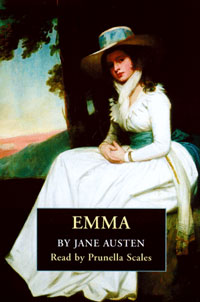
16. "Emma" by Jane Austen


Austen, Jane. Emma. New York: Washington Square Press, 1963.
430 pages
Reviewed by J. d'Artagnan Love

Since I started studying literature, I have begun to read in a very calculating way. I read looking for certain things like theme, feminist and queer discourse, post-colonial rhetoric, tropes, plot devices, errors, holes, flat characters, etc. I can’t remember the last time I just read a book forgetting about all these very academic forms of reading. Studying literature has certainly added a new dimension of thought to my reading but it has sucked the life out of the characters for me in some ways. No longer are they there for me to feel connected to, but for me to pick apart and analyze.

I started reading Emma over a year ago and, at first I thought it was this exact form of calculated reading that has kept me at a distance from this novel’s characters. For the first half of the book or so, all I could think about was how boring they were—rich, British snobs sitting around doing nothing but gossip about each other. To me, they held little depth and caused each other nothing but trouble.

So, I tried to put aside my literary “training” and just read the novel for pleasure. I tried to get to know the characters, to become involved in the plot.

It didn’t work.

As much as my academic peers will give me crap for it, I don’t like this book and I couldn’t finish it. It was a little bit like literary torture trying to read to the end. I stopped at 2/3’s of the way through. I could go no farther.

I am a very plot-oriented reader. I like a good story. Emma’s plot bored me. The characters gossip from one party to the next and poor widdle Emma meddles needlessly and unproductively in other people’s lives. Maybe I would gain a better appreciation of the book if I read it through to the end. Maybe there is some mind-blowing plot twist on page 400 that I’ve missed. The thought still wasn’t enough to get me to keep reading.

1 dart out of 5
Bookshelf Project Status: DONATE (donated to Goodwill)

Monday, September 14, 2009

12. "Between the Acts" by Virginia Woolf


Woolf, Virginia. Between the Acts. San Diego: Harcourt Inc., 1941.
219 pages
Reviewed by J. d’Artagnan Love

Between the Acts
was the last book Virginia Woolf wrote before her suicide in 1941. It is a story about a family in England who hosts a play at their country home to raise money for the church. The plot covers the play itself as well as the interactions and happenings, as the title suggests, between the acts. There are several unhappy characters making connections with other equally unhappy characters and a lot of implied scandal that never comes to fruition.

I am usually a huge Virginia Woolf fan. She is my favorite writer, and this is the first of her novels that I’ve been disappointed by. Keeping in mind that she died before she was able to make revisions, the characters seemed to lack the motivation and depth Woolf had so frequently achieved in her earlier novels. The plot moved slowly, very slowly, and nothing really seemed to happen. The depiction of character interactions was dull and simplistic.

Maybe this is the effect Woolf was going for. Maybe she wished to illustrate how mundane life can be. If that was the goal, it sure didn’t make for good reading. This is not her best work and I would recommend Orlando or Mrs. Dalloway over Between the Acts in a heartbeat.

1.5 darts out of 5

Friday, August 28, 2009

11. "HOWL and Other Poems" by Allen Ginsberg


Ginsberg, Allen. HOWL and Other Poems. San Francisco: City Lights Books, 1956.
44 pages.
Reviewed by J. d’Artagnan Love

HOWL is the first book of poetry I’ve ever tried reviewing. This collection contains work by Ginsberg while he was in Berkeley, California and some from his earlier years as well. Originally meant as performance pieces, his poems explore themes of nature, love, God, spirituality, sex and sexuality, industrialism, materialism, and politics. HOWL’s publisher was actually put on “obscenity” trial because of the text’s graphic nature.

His poems are written in a Walt Whitman-esque style and in the poem “A Supermarket in California”, Ginsberg actually addresses Whitman directly. It is quite obvious that he was inspired by Whitman’s long and repetitive phrases. If you are a Walt Whitman fan, you will probably be able to appreciate this text.

My personal favorite poem from this collection was “America.” In “America” Ginsberg’s voice drips with ironic sadness, disappointment, and confusion. There is a certain intimacy about it that I greatly appreciated.

This text is worth a read if you are at all interested in poetry or queer writing and writers. He celebrates bodies and sex as something holy and doesn’t shy away from the darker parts of life in America in the 1950’s.

3 darts out of 5.