Showing posts with label 1 Rating. Show all posts

Friday, June 26, 2020

141. The Total Money Makeover by Dave Ramsey


(Image Source)

Ramsey, Dave. TheTotal Money Makeover. New York, NY: Nelson Books, 2007, Kindle eBook.

229 pages

Reviewed by Jess d'Artagnan Love

I picked up The Total Money makeover because it has been pushed on me and pushed hard. Any mention of finances in any of my social circles and I was suddenly being in-boxed adamant suggestions that I read this book and adhere to Ramsey’s advice. I finally caved and bought a copy for my Kindle. I now regret spending my hard-earned dollar on this book rather than checking out from the library.

Ramsey uses the metaphor of “fatness” to describe when a person is lacking financial freedom. He calls lacking financial freedom being “financially flabby.” He describes fat bodies in ways that make them seem undesirable, disgusting, and unworthy of existing. This fat-phobic theme arches through the entire book and set me on the path to greatly disliking not only the book, but Ramsey himself.

Ramsey in the very first chapter tells you that what he wrote in this book are a collection of unoriginal ideas. He admits that he not adding anything new to the field of finance but repeating financial “truths” and debunking some financial myths. You can so easily find this information literally anywhere else. It is not Ramsey specific and he doesn’t provide a unique or original strategies to the field. I’m not making that up. He flat out states that in the first chapter. So why write a book and then market it to a bunch of people struggling financially, desperate for answers? Money, duh. Ramsey’s ultimate goal is to be super rich and I guess exploiting readers is one way he meets that goal.

The chapters are made up of a recipe of thirds. One third of the chapter is actual, practical advice (that you can find anywhere else online), the second third is Ramsey shaming people for being financially “flabby,” and the final third of the chapter is “testimony” (AHEM: marketing) from “real life couples (usually white couples) who have used Ramsey’s strategies (that are not really his original strategies) for financial freedom so you should buy ALL OF RAMSEY’S PRODUCTS. :: insert cheerleader split jump here ::

My ultimate takeaway is that there are good principles in this book, but they aren’t Ramsey’s. He is a wordsmith who knows how to grind into people’s emotional vulnerabilities around money, so I’m not surprised that there is what I am calling a “cult of personality” around this guy and his work. Because his work isn’t really that good, but his personality is what he’s selling.

1 star out of 5

Would I read it again? 

No, and I won’t be reading or investing in any of his other products either.

Recommended for

Nobody. Don’t. waste. Your. Money. On. This. Rubbish. You can find this information online. FOR FREE.

Not Recommended for

People who are trying to save money or who are looking for financial advice that isn’t deeply rooted in shame.

Connect with me!

Instagram

Twitter

Facebook

Youtube

Goodreads


Saturday, July 28, 2018

124. "The Burning Bridge" by John Flanagan


Flanagan, John. The Burning Bridge. New York, NY: Puffin Books,  2005. Print.

262 pages.

Reviewed by J. d'Artagnan Love

The Burning Bridge picks up right where the Ruins of Gorlan left off. Morgarath is planning for a war with the kingdom and Will and Halt are following the trail. Spoiler alert, as the title suggests, Morgarath built a bridge and Will burns it down. The end. 

I want so badly to like this series. People in my life cherish it, but I just did not enjoy this book. The descriptions of battle practice were long and monotonous and there was an obvious subtle misogyny underscoring the entire story. 

The portrayal of women and girls in this series just infuriates me. If there was a woman ranger, I'd be all about it, but the women in this series all have soft roles--negotiator and cook (barf). Women in leadership roles in the kingdom are spoken to rudely and treated as if incompetent. Don't forget a nice dose of mansplaining as the cherry on top. Here's an example:

"I'll speak of her, all right! I'll tell you this. She's a woman meddling in a man's world, where she has no place. She should have found a husband years ago and raised a brood of squalling babies. Surely there's a deaf and half-blind man somewhere who would have ten her" (93). 

The worst part of this dialogue? Nowhere does anyone defend Pauline, the woman being spoken of and nowhere is this attitude refuted as despicable or even questionable. 

This book's target audience is boys age 10-12. If I had a son who wanted to read this series, I would let him because I'm anti-book banning BUT we would have a SERIOUS conversation about the toxic masculinity represented in these stories. 

Would I read it again?
NOPE

Recommended for: 
Maybe someone in gender studies looking for a series that overtly teaches young boys toxic masculinity.

Not Recommended for: 
Pretty much most decent human beings.

Word Bank (new-to-me vocabulary)


1 star out of 5. 

John Flanagan's website: http://www.worldofjohnflanagan.com/

Previous Ranger's Apprentice books reviewed

Connect with me!
Instagram: @jdartagnanlove
Twitter: @jdartagnanlove

Sunday, June 22, 2014

76. "Allegiant" by Veronica Roth


***Spoiler Alert***

This review contains spoilers


Roth, Veronica. Allegiant. Katherine Tegen Books, 2013

523 pages

Reviewed by J. d’Artagnan Love

In Roth’s final book in the Divergent series, plot holes abound. I didn’t enjoy this one and not for the way it ended, although the ending was lazy and juvenile. My points of contention are as follows:

1. Bad point of view shifts: In Allegiant, Roth attempts to switch the point of view between Tris and Tobias. She failed….horribly. When using two separate points of view, a writer needs to make the narration different in each POV so readers can distinguish between characters. Tris and Tobias’ voices are identical. The only way a reader can tell the difference between the characters are by the convenient chapter titles indicating who is narrating. Sometimes there was a telling context clue to indicate the narrator, but the voice and narration style was identical. IDENTICAL.

2. Suspension of disbelief can only go so far. There were some serious plot holes. A few plot holes here and there and readers can typically suspend their disbelief to make the story work. Suspension of disbelief can only go so far before the story falls apart. The most egregious plot holes are listed below, but there are others outside this list, even.

  • Plot hole #1: David. David is supposed to be inoculated against the death serum. He is the leader of this highly important governmental organization. Why would he not have also been inoculated against the memory serum?
  • Plot hole #2: The government is supposed to be highly organized and scientifically sophisticated. They are sophisticated enough to add and remove genes. Supposedly by removing certain genes they created genetically damaged people, so instead of using their incredible gene technology to fix the problem, they decide to wait a couple centuries to see if it will magically cure itself. Are we supposed to believe that in several centuries' time, they aren't still advancing the genetic science used to remove the genes in the first place? This plot is hasty, lazy and illogical.
  • Plot hole #3: The government used memory serum on the Chicago population to start the gene program. The study falls apart when factions turn against one another, violently wiping out the divergent populations that the government seeks to preserve. So to solve the problem they decide to re-set the population’s memory….because that worked so well the first time. Riiiiiight.
  • Plot hole #4: The ending, according to a blog written by Veronica Roth, was meant to show how Tris chooses Abnegation values over all others. This is a nice thought, BUT it completely erases the entire point of what it means to be divergent. Divergent means that people are able to make choices based on several skill sets and critical thinking skills. They aren’t locked into the patterns of thought that define their factions. If Tris was truly as special and as “genetically healed” as she was described to be, she should be able to think of a creative way to overcome the situation with David without sacrificing herself in the process. The idea of being divergent is something I actually really liked about the series, but this sloppy ending annihilated the entire concept.

3. Poor development of periphery characters. Several periphery characters die in Allegiant: Tori, Uriah, etc. The problem with this is that character deaths are only an effective writing device if the reader is somehow attached to that character. The lack of development in these periphery characters creates a “meh” reaction when they die. It makes their deaths a quick way to tie a neat little bow around their story arc without having to put much creative thought into it.

4. Four. In the first two books, Four/Tobias is a brash, hard, brave leader of the dauntless. He's mature and makes intelligent decisions. In Allegiant he becomes a weepy, fearful, indecisive man-boy. The problem with this is that the change is abrupt. There is no transition or progression that would constitute, you know, character development. The transformation is instead instantaneous with no trigger. This version of Four is far less appealing than the Four of the previous books and serves little purpose in moving the story arc. If Roth was trying to show vulnerability in his character, it could have been done without making him an entirely different person. 

Often, I can redeem books I don’t like by feeling entertained regardless of the weaknesses. I could do that with Divergent and maybe even Insurgent, but I can’t do that with Allegiant. I don’t recommend reading this book. The only reason I can give for picking it up is so one will know how the series ends, but honestly, watch the movie instead. It will probably be better.

1 dart out of 5

Bookshelf Project Status: Return to library

Saturday, October 22, 2011

46. "The Healer" by Sharon Sala


Sala, Sharon. The Healer. Ontario: Mira, 2008.

Reviewed by J. d'Artagnan Love

I have to be honest. I didn't even finish this book. I read about half of it.

The plot was not terrible but not all that original either. Sala essentializes Native Americans as natural "healers" and switches between points of view rather confusingly. The narration is bland and unconvincing.

I just didn't feel it was worth finishing this drivel. I don't recommend it. I give it one star simply for its entertainment value. It was better than sitting in waiting rooms doing nothing.

1 dart out of 5
Bookshelf Project Status: donated

Saturday, April 2, 2011

41. "The Almost Moon" by Alice Sebold


Sebold, Alice. The Almost Moon. New York: Little, Brown, and Company, 2007.
291 pages
Reviewed by J. d'Artagnan Love

Alice Sebold is the author of the bestselling novel The Lovely Bones. The Almost Moon is her most recent publication and was debuted in 2007. The Almost Moon is about Helen Knightly who murders her mentally ill mother by smothering her with a towel.

I have not read The Lovely Bones, but I was not impressed with Sebold's second novel (The Almost Moon). The book traces the twenty four hours after Knightly's murder and the flashbacks (tangents) she has about her relationship with her now-dead mother.

This book has plenty of shock and awe, but the writing is clumsy and messy. The characters are drab and the narrative's voice is unoriginal and flat. The constant transitions between past and present tense are amateur and unimaginative.

Bookshelf Project Status: DONATED (to my university's writing club)
1 darts out of 5

Saturday, March 27, 2010

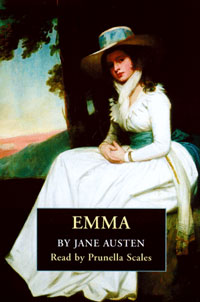
16. "Emma" by Jane Austen


Austen, Jane. Emma. New York: Washington Square Press, 1963.
430 pages
Reviewed by J. d'Artagnan Love

Since I started studying literature, I have begun to read in a very calculating way. I read looking for certain things like theme, feminist and queer discourse, post-colonial rhetoric, tropes, plot devices, errors, holes, flat characters, etc. I can’t remember the last time I just read a book forgetting about all these very academic forms of reading. Studying literature has certainly added a new dimension of thought to my reading but it has sucked the life out of the characters for me in some ways. No longer are they there for me to feel connected to, but for me to pick apart and analyze.

I started reading Emma over a year ago and, at first I thought it was this exact form of calculated reading that has kept me at a distance from this novel’s characters. For the first half of the book or so, all I could think about was how boring they were—rich, British snobs sitting around doing nothing but gossip about each other. To me, they held little depth and caused each other nothing but trouble.

So, I tried to put aside my literary “training” and just read the novel for pleasure. I tried to get to know the characters, to become involved in the plot.

It didn’t work.

As much as my academic peers will give me crap for it, I don’t like this book and I couldn’t finish it. It was a little bit like literary torture trying to read to the end. I stopped at 2/3’s of the way through. I could go no farther.

I am a very plot-oriented reader. I like a good story. Emma’s plot bored me. The characters gossip from one party to the next and poor widdle Emma meddles needlessly and unproductively in other people’s lives. Maybe I would gain a better appreciation of the book if I read it through to the end. Maybe there is some mind-blowing plot twist on page 400 that I’ve missed. The thought still wasn’t enough to get me to keep reading.

1 dart out of 5
Bookshelf Project Status: DONATE (donated to Goodwill)